
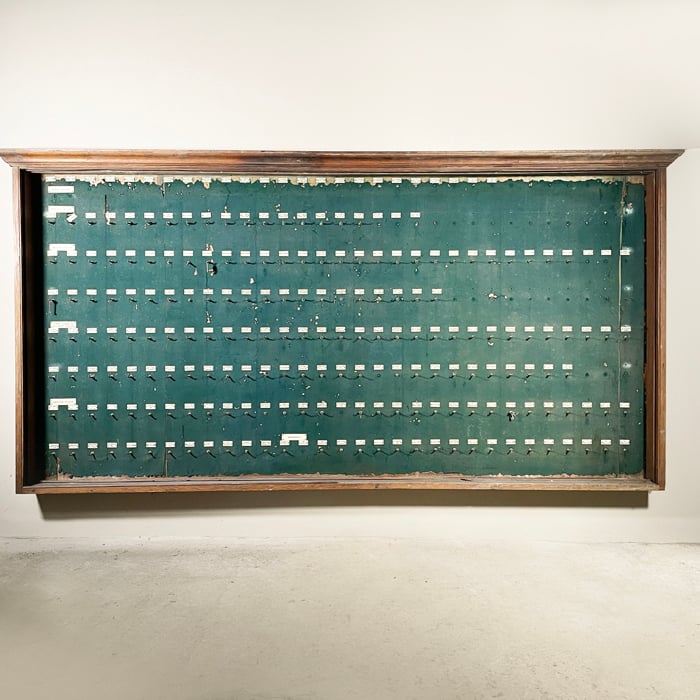
The Charlton Park key press
$ 96.03
brand:
Category: Plastic JarsThe labels are organised into the following rows: PLANT HOUSE, KITCHEN BLOCK, SECOND FLOOR (two rows), FIRST FLOOR AND NURSERY FLOOR (two rows), GROUND FLOOR(two rows). The ivorine rectangular tags are evocative: “From Lady Fanny’s Room to Nursery”, “Large Drawing Room to Main Hall”, “Lady Suffolk’s Dressing Room” and so on. Charlton Park is a large Country Estate in Wiltshire of around 4500acres – it has been the seat of the Earls of Suffolk since early in the 17th Century. John Dryden wrote “Annus Mirabilis” when a guest at the house in 1667. Charlton Park Much later, in the 1770’s, under Henry Howard the 12th Earl, Matthew Brettingham the Younger (1725-1803) was engaged to radically improve and update the house. Brettingham had spent most of his architectural career working for his father’s accomplished practice and, having based much of his early years in Rome receiving Grand Tourists in general and his father’s client Thomas Coke in particular (involved in the procurement of sculpture for Holkham) – Charlton remains one of only a few houses attributed solely to the younger Brettingham’s designs. Plaque in the house detailing Brettingham’s work Brettingham operated in circles that saw him granted lucrative appointments such as “Deputy Revenue Collector of The Cinque Ports”. As Howard Colvin tactfully puts it, in reference to Brettingham’s occasional work after the death of his father in 1769, “the income derived from his sinecures seems largely to have relieved Brettingham from the need to develop an extensive architectural practice”. The hall – roofed over by Brettingham His project saw the central courtyard roofed over and the hall and surrounding rooms transformed into a spectacular Georgian interior. Charlton Park As with so many such houses – despite a restoration in the 1920’s, the middle six decades of the 20th Century saw a painful decline. However, the house was in the vanguard of a drive to re-invent dilapidated country houses in the 1960’s and 70’s. In 1975, emulating the work of The Country Houses Association, Christopher Buxton formed “Period and Country Houses Ltd.” and inventively divided the grand house into separate residences which would meet the needs and budget of aspirational folk alongside the Earl who remained in residence. It saved the house but compromises were made. A series of photographs of the house prior to its conversion, and in a sorry state, show the empty interior as Buxton found it. That division explains why the Key Press was rendered redundant – the house had been divided up into smaller apartments and leased – no one individual now had oversight of all the doors and all those keys.